


UK Entry Clearance Visa: Everything You Need to Know
Entry clearance is a concept that most people will have come across at one point or another while preparing for their moving, studies, employment, or stay in the UK from abroad. Essentially, Entry Clearance Visa refers to the official approval required before traveling to the UK.
In this blog, you will understand what a UK Entry Clearance Visa is, along with all the related key details for the same. Read on!
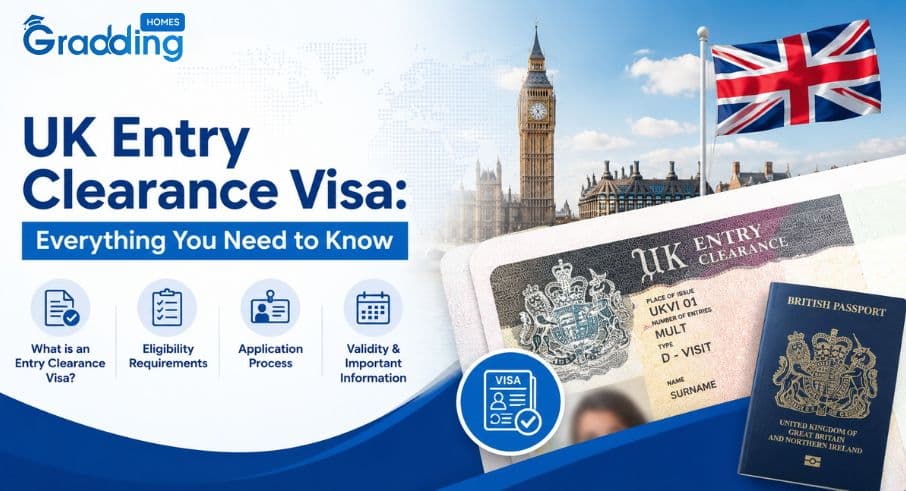
Table of Contents

1. Is UK Entry Clearance the Same as a UK Visa?
2. What is the Entry Clearance Number for a UK Visa?
3. Do You Need a Police Clearance Certificate for All UK Visas?
4. How Long Does a Police Clearance Certificate Remain Valid for a UK Visa Application?
5. Can I Apply for a UK Entry Clearance Visa without a Police Clearance Certificate?
What Is a UK Entry Clearance Visa?
To start with, a UK Entry Clearance Visa is actually the pre-approval which gives an individual the right to enter the UK for the purpose specified. These purposes could be vacation, work, university studies, or meeting up with their relatives. It is granted to a traveller by an official from the UK Visas and Immigration (UKVI), usually through a visa application centre in your own country before they enter the UK.
It is a sort of green light from the government of the UK saying, "Yes, you are entitled to enter, and here is the reason for doing so." This clearance is stamped or linked electronically to your passport. It specifies the time period for which you are allowed to stay, the activities which you are supposed to undertake, like studying, working, or vacation, etc., along with the conditions of this authorisation.
Without such an authorisation, almost all travellers from visa-free countries would not be allowed to board a plane flying towards the UK, and even if they are lucky enough to manage this, they would face the problem of denial of entry into the country.
Who Needs a UK Entry Clearance Visa?
Not all travellers coming into the UK require an application for entry clearance prior to arrival. Basically, whether one will be required or not depends largely on one's nationality and the intention behind one's visit.
- If someone is a citizen of a country that needs a visa in order to enter into the UK ("visa nationals"), then in the majority of cases they have to obtain entry clearance no matter how long their period of stay.
- However, non-visa nationals who visit the UK for tourism or business for less than six months do not necessarily require prior clearance and only need their passport (and ETA in some cases).
- Those wishing to study, work, join family members or reside permanently in the UK will need to have a UK Entry Clearance Visa no matter what their citizenship is.
- Some transit passengers may also need entry clearance despite the fact that they do not enter the UK.
When you are uncertain, it is better to confirm first via the UK government visa checker before proceeding with bookings, as being late in doing so or assuming one’s exemption is the most common mistake made.
Difference Between UK Entry Clearance and Visa
There tends to be overlap in the meanings of "entry clearance" and "visa," and indeed, in common parlance, this does not really matter. But should you be going through Home Office forms and guidance, being able to difference between UK entry clearance and visa will be helpful.
While the latter refers to a document or status which enables one to enter, reside, or work in the United Kingdom, the former relates to the actual process, i.e. the decision taken by the entry clearance officer in connection with the applicant's request made outside of the UK prior to travel.
Thus, upon having a visa application accepted in the UK embassy or consulate abroad, one obtains entry clearance, which takes the form of either a sticker (vignette) affixed to the passport, or an eVisa stored in the UKVI online account. "Leave to remain" is the process of changing the type of visa while staying within the UK territory.
To be precise, go through the following table:
Where to Find Entry Clearance Number on a UK Visa?
If you are being asked for your entry clearance number UK visa reference but have no idea where it can be on that visa sticker you just got, you are not the only one who is confused. It is one of the most frequent questions asked by people after they get their visa.
In case you got a physical visa vignette, your entry clearance number will be written vertically in the right margin of your passport visa sticker. It is different from the visa number, which is normally presented horizontally in the top section of the sticker inside a box.
For people having digital status, the equivalent number will be accessible through their UKVI online account. There you will find the details of your immigration status, including all your reference numbers, which you can see on the page called "View and prove your immigration status."
It is more important than it seems, since it may be needed when booking biometric appointments, writing to the Home Office or proving your status to your future employer or landlord.
What Is Police Clearance Certificate and Who needs It?
A police clearance certificate for UK Visa applications, which can alternatively be known as either a Certificate of Good Conduct or a criminal record certificate, is a formal document that confirms your criminal background in the nation from which you come from.
For the following visa categories, the UK Home Office requires that applicants produce such certificates:
- Applications made by adult dependents who wish to join their relatives who are already living in the UK.
- Visa applications in specific cases, particularly where there is involvement of vulnerable individuals, such as those working in healthcare, education, or childcare.
- Settlement and indefinite leave to remain applications in specific classes.
- Those who have resided in a particular country for 12 months or more in the past 10 years.
However, not all applicants need to provide one because it really depends on the visa type and one’s past dealings with immigration processes. Nonetheless, failure to submit one or providing an incomplete one will guarantee delays in your application process.
How to Apply for Police Clearance Certificate?
The application for the police clearance for UK visa is not made via the UK government but rather via the local police/judicial authorities where one had resided in the past. The process differs from country to country, although it usually involves:
- Specify the appropriate issuing authority (may be national police headquarters, ministry of interior or judicial department).
- Make the application along with identification, residence history documents and sometimes fingerprints.
- Pay the corresponding fee, which may vary greatly according to the particular country.
- Cope with processing that may take some days up to several months.
- Take care of translation of the certificate and sometimes legalization or apostille, if the certificate is not written in English.
As the police clearance certificate validity for UK visa is usually accepted within a specific period from the day of issuance (usually six months), it is crucial to time your application properly because applying either too soon or too late will cause problems.
Documents Required for a UK Entry Clearance Visa
Depending on the type of visa you are applying for, the precise documents needed for a UK Entry Clearance Visa may vary. However, there is basic documentation that all applicants must submit:
- A valid passport with an empty page left to stamp on.
- A duly filled UK visa application form online through the portal of UKVI.
- Proof of means of finance in the form of pay slips, bank statements, or a sponsorship letter.
- Proof of confirmed address in the case of a visa or invitation letter.
- Biometrics (fingerprint and photo) taken from the visa applicant at the visa centre.
- A Police clearance certificate that a UK visa applicant may need, based on the category of the visa.
- Evidence according to the visa category (Certificate of Sponsorship in case of a work visa, CAS in case of a student visa).
- The certified translation of any document which is not in English or Welsh.
It may be a good idea to check the particular document list associated with your visa type from the gov.uk website prior to applying because the submission of an incorrect combination of documents is one of the easiest ways to have your application rejected.
Common Reasons for UK Entry Clearance Visa Delays
Even if applicants go through all the proper procedures, there will still be a delay in the decision process, and this understanding will help you avoid getting panicked when there is a delay in your decision process.
- The inconsistency of the documents provided by the applicant, including inconsistencies in the name, dates and address in the documentation.
- An expiring or missing police clearance certificate since the validity of the certificate must still be within the acceptable period.
- Increased number of applications, especially before the start of the academic year and holidays.
- Other security checks that may be done because of the nationality of the applicant or the kind of visa route the applicant is applying for.
- Any mistake in filling out the online application form.
In case you are experiencing a delay in the processing of your application beyond the normal processing period, it is always advisable for you to make inquiries via the online tracking tool rather than to submit duplicate documents just to hasten the process.
Final Thoughts
To sum up, the UK Entry Clearance Visa represents your ticket to go ahead and apply for your clearance visa to the United Kingdom. Getting everything right on your first try is a matter of knowing what category you fall into, filling out accurate forms, and making sure to send in things such as police clearances on time. If you do your homework before applying for the UK clearance visa, you will have no problems at all.
Frequently Asked Questions
1. Is UK Entry Clearance the Same as a UK Visa?
No, Entry Clearance refers to the procedure, while the visa is the actual sticker or eVisa showing that the applicant's entry clearance was approved.
2. What is the Entry Clearance Number for a UK Visa?
It is an alphanumeric number placed on the visa vignette or available through your UKVI online account, which confirms your immigration status.
3. Do You Need a Police Clearance Certificate for All UK Visas?
No, you will need to submit the certificate only if your visa category requires it.
4. How Long Does a Police Clearance Certificate Remain Valid for a UK Visa Application?
Normally, the certificate is valid for six months from its issuance date.
5. Can I Apply for a UK Entry Clearance Visa without a Police Clearance Certificate?
Yes, you can. But only if it is not a requirement for the type of UK visa you apply for.
0 comments
9 People watching now
Chat with Expert
9 People watching now
Connect with our accommodation experts to discover verified properties that match your budget and preferences.
Chat with Expert
Most Affordable
Get 24x7 Facilities
Convenience & Comfort
Clean & Hygienic





We are available in :
LondonBirminghamNewcastleManchesterLiverpoolLutonPortsmouthPrestonLeicesterSheffieldBristolReadingDerbyEdinburghGlasgowNottinghamLeedsCanterburyBathSunderlandDisclaimer:logos and other registered trademarks of universities and properties used on this platform are held by their respective owners. Gradding Homes does not claim ownership or association on them, and their use is purely for informational and illustrative purposes.